Page 1 of 8
Circle of fifths
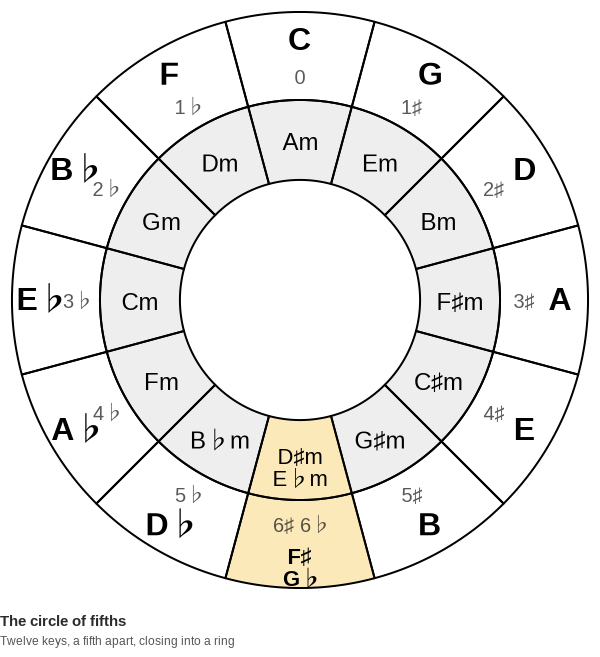
The circle of fifths is the compass and the cornerstone of music theory. Mystical? Magical? A little of both. This chapter shows where it comes from, how it's built and how it's used. By the end you can find the key signature of any key in seconds, name its relative minor and say which keys sit close together. No table to memorise. You get the basics here; chords and harmony will lean on it again.
- building the circle of fifths — climb by fifths from C and watch the ring close.
- key signatures — one new sharp or flat per step, and a trick to read any signature.
- relative minors — every major key has a minor twin that uses the same notes.
- which keys are close — why some key changes feel smooth and others feel like a jump cut.
- using the circle of fifths — what the wheel is for, on one page.
- practicing the circle — three exercises to make it stick.
- Coltrane circle — the same wheel, read for patterns instead of key signatures.
← Scales
↑ README